Dua e Qunoot in Arabic with Urdu Translation Complete Guide
If you’ve ever found yourself standing in Witr prayer, hesitating slightly as you reach the final rak’ah, wondering, “Do I really need to read Dua e Qunoot? And if so which one? trust me, you’re not alone.
Whether you’re someone who regularly attends tahajjud, just getting started with your salah journey, or someone who loves listening to beautifully recited duas and naats learning about Dua e Qunoot is a small but deeply meaningful step. Let’s break it down together in a way that’s clear, sincere, and easy to remember.
What Is Dua e Qunoot?
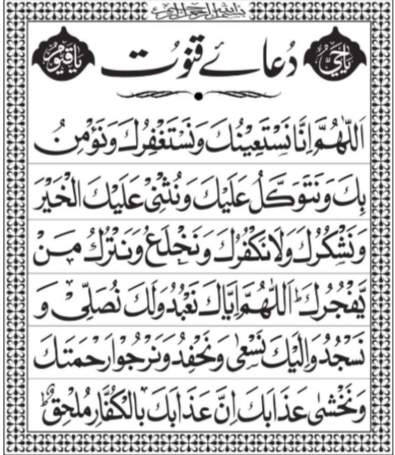
Dua e Qunoot (دعاء القنوت) literally means “supplication of humility” or “prayer of obedience.” It’s a heartfelt supplication recited during the Witr prayer, which is the final prayer of the night in Isha. The word Qunoot itself comes from the Arabic root Q-N-T, which implies devotion, humility, and standing in obedience.
For many, it’s that special moment in the night where we pause, raise our hands, and speak directly to Allah with sincerity.
Arabic Version of Dua e Qunoot
اللَّهُمَّ اهْدِنِي فِيمَنْ هَدَيْتَ، وَعَافِنِي فِيمَنْ عَافَيْتَ، وَتَوَلَّنِي فِيمَنْ تَوَلَّيْتَ، وَبَارِكْ لِي فِيمَا أَعْطَيْتَ، وَقِنِي شَرَّ مَا قَضَيْتَ، فَإِنَّكَ تَقْضِي وَلَا يُقْضَى عَلَيْكَ، وَإِنَّهُ لَا يَذِلُّ مَنْ وَالَيْتَ، وَلَا يَعِزُّ مَنْ عَادَيْتَ، تَبَارَكْتَ رَبَّنَا وَتَعَالَيْتَ
English Translation:
O Allah! Guide me among those whom You have guided, grant me well-being among those You have granted well-being, take me into Your charge among those You have taken into Your charge, bless me in what You have given, and protect me from the evil You have decreed. Surely, You decree and none can pass a decree upon You. Surely, he whom You show loyalty to is never disgraced, and he whom You show enmity to is never honored. Blessed are You, our Lord, and Exalted.
Urdu Translation of Dua e Qunoot
اللَّهُمَّ اهْدِنِي فِيمَنْ هَدَيْتَ،
اے اللہ! مجھے ان لوگوں کے ساتھ ہدایت دے جنہیں تو نے ہدایت دی۔
وَعَافِنِي فِيمَنْ عَافَيْتَ،
اور مجھے ان لوگوں کے ساتھ عافیت عطا فرما جنہیں تو نے عافیت دی۔
وَتَوَلَّنِي فِيمَنْ تَوَلَّيْتَ،
اور مجھے ان لوگوں میں شامل فرما جنہیں تو نے اپنا دوست بنایا۔
وَبَارِكْ لِي فِيمَا أَعْطَيْتَ،
اور جو کچھ تو نے مجھے عطا فرمایا، اس میں برکت عطا فرما۔
وَقِنِي شَرَّ مَا قَضَيْتَ،
اور مجھے اپنے فیصلے کے شر سے بچا۔
فَإِنَّكَ تَقْضِي وَلَا يُقْضَى عَلَيْكَ،
بے شک تو فیصلہ کرتا ہے اور تیرے خلاف کوئی فیصلہ نہیں ہو سکتا۔
وَإِنَّهُ لَا يَذِلُّ مَنْ وَالَيْتَ،
اور جسے تو دوست بناتا ہے وہ کبھی ذلیل نہیں ہوتا۔
وَلَا يَعِزُّ مَنْ عَادَيْتَ،
اور جس سے تو دشمنی رکھتا ہے وہ کبھی عزت نہیں پا سکتا۔
تَبَارَكْتَ رَبَّنَا وَتَعَالَيْتَ۔
تو بابرکت ہے، اے ہمارے رب، اور تو بہت بلند ہے۔
FAQS?
Here are a few things people often ask and I’ve wondered some of these too:
Can I pray Witr without Dua e Qunoot?
Yes, particularly if you forget or are still learning. It’s not a reason to skip the prayer altogether.
What can I recite instead if I don’t know it?
Some scholars allow reciting simple duas like “رَبَّنَا آتِنَا فِي الدُّنْيَا…” or even Surah Ikhlas with sincerity until you learn the full Qunoot.
Why are there different versions?
There are several authentic narrations. The version above is widely taught, but you may hear others all are valid and meaningful.
Can women recite it while praying at home?
Yes! There’s no gender-based restriction on Dua e Qunoot. In fact, it’s encouraged for everyone.
Conclusion:
Dua e Qunoot is more than just a prayer we “have to” say it’s a gift we get to say. A moment in the silence of the night where you’re not just reciting you’re reaching. It might feel like just a few words, but its power lies in the heart behind them.
If you’re someone who finds peace in the rhythm of prayer, or you cherish the poetic nature of naats and Islamic recitations, take the time to connect with this dua. You’ll be amazed how something so short can become such a powerful part of your nightly connection with Allah.