Qurani Dua Maghfirat Waldain Parents Ki Bakshish Ki Powerful Dua (Surah Nuh)
This beautifull Qur’anic dua for the forgiveness of parents, a heartfelt supplication taught by Allah Himself in Surah Nuh (25:28). The dua begins with humility and deep love, asking Allah to grant maghfirat (forgiveness) to one’s parents, oneself, and all believing men and women. It reflects the core Islamic value of honoring parents and remembering them in prayer, whether they are alive or have returned to Allah.
The phrase “dua maghfirat waldain” carries immense spiritual weight in Islam. It is not just a prayer, but an ongoing act of kindness (sadaqah jariyah) for parents. This dua reminds believers that seeking forgiveness for parents is a source of mercy, barakah, and closeness to Allah. Reciting this supplication strengthens family bonds, nurtures gratitude, and keeps the believer mindful of their responsibilities toward their mother and father.
Many Muslims recite this dua for parents’ forgiveness daily, after salah or during personal moments of reflection, because it combines love, obedience, and faith in a few powerful words. Whether you are looking for a Qur’anic dua for waldain, a prayer for deceased parents, or a dua for parents’ maghfirat, this verse stands as one of the most authentic and spiritually uplifting supplications in Islam.
Dua maghfirat waldain PDF
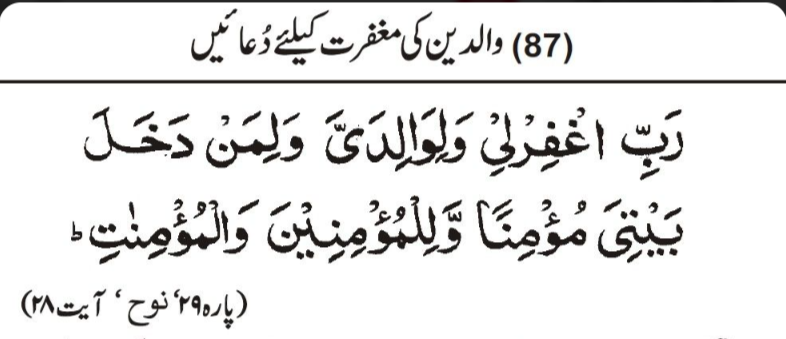
Urdu transltion Dua maghfirat waldain
اے میرے رب! مجھے بخش دے، اور میرے ماں باپ کو بھی، اور ہر اس شخص کو بھی جو ایمان کی حالت میں میرے گھر میں داخل ہو، اور تمام ایمان والے مردوں اور ایمان والی عورتوں کو بھی بخش دے۔
Benefits of Dua Maghfirat Waldain
The dua maghfirat waldain is one of the most powerful Qur’anic supplications, carrying deep spiritual, emotional, and moral benefits for both parents and the one who recites it. This dua is not limited to words; it reflects a believer’s sincerity, gratitude, and obedience to Allah.
- Source of Forgiveness for Parents
Reciting this dua for parents’ forgiveness becomes a means of mercy for one’s mother and father. Whether they are alive or have passed away, this supplication helps seek Allah’s maghfirat and ease for them in this world and the Hereafter.
- Continuous Reward (Sadaqah Jariyah)
Making dua maghfirat waldain regularly is a form of ongoing charity. Especially for deceased parents, this prayer continues to raise their status and bring them reward, even after their deeds have ended.
- Pleasing Allah and Following the Qur’an
This dua is mentioned directly in the Qur’an, which means reciting it is an act of obedience. Seeking forgiveness for parents is beloved to Allah and strengthens a believer’s connection with Him.
- Brings Barakah into One’s Life
Those who consistently make dua for waldain often experience peace of heart, ease in matters, and blessings in sustenance. Honoring parents through dua invites divine barakah into daily life.
- Strengthens Love and Gratitude for Parents
Regularly reciting this Islamic dua for parents softens the heart and nurtures respect, patience, and gratitude. It reminds believers of their parents’ sacrifices and encourages good character.
- Protection and Mercy for the Believer
Since the dua also includes asking forgiveness for oneself and all believers, it becomes a shield of mercy. This comprehensive supplication brings spiritual protection and inner tranquility.
- A Sunnah-Inspired Habit for Daily Life
Making dua maghfirat waldain after salah or during quiet moments helps build a consistent habit of remembrance, keeping parents in one’s prayers at all times.
FAQs
What is dua maghfirat waldain?
Dua maghfirat waldain is a Qur’anic supplication in which a believer asks Allah for forgiveness and mercy for their parents. It is a powerful dua for parents’ forgiveness mentioned in Surah Nuh and widely recited by Muslims around the world.
Can dua maghfirat waldain be recited for deceased parents?
Yes, this dua for deceased parents is highly recommended. It becomes a source of ongoing reward (sadaqah jariyah) and mercy for parents who have passed away, and it can help elevate their status in the Hereafter.
When is the best time to recite dua maghfirat waldain?
There is no fixed time. You can recite dua maghfirat waldain after salah, during tahajjud, on Fridays, or anytime you make personal supplications. Consistency matters more than timing.
Is dua maghfirat waldain mentioned in the Qur’an?
Yes, this Qur’anic dua for waldain is found in Surah Nuh (25:28), making it one of the most authentic and powerful supplications for parents in Islam.
Can children recite this dua for living parents as well?
Absolutely. Making dua for parents’ maghfirat while they are alive brings blessings, protection, and barakah into their lives and strengthens the bond between parents and children.
Does reciting dua maghfirat waldain bring rewards to the reciter?
Yes, honoring parents through this Islamic dua for parents earns Allah’s pleasure. The one who recites it receives spiritual rewards, inner peace, and increased barakah in their life.
How often should dua maghfirat waldain be recited?
It can be recited daily. Many Muslims include dua maghfirat waldain in their regular duas after prayers to ensure their parents are always remembered before Allah.
Conclusion:
The dua maghfirat waldain is more than a simple supplication it is a heartfelt expression of love, gratitude, and faith. Through this beautiful Qur’anic dua, a believer stays connected to their parents in the most meaningful way, asking Allah to cover them with forgiveness, mercy, and peace. Whether parents are alive or have returned to Allah, this dua keeps their rights alive in our daily prayers.
Making dua for parents’ forgiveness regularly softens the heart, strengthens iman, and brings barakah into one’s life. It reminds us that honoring parents does not end with words or actions alone, but continues through sincere prayers made with humility. In a fast-paced world, this simple yet powerful supplication helps us pause, reflect, and turn to Allah with gratitude for the blessings of our parents.
By adopting dua maghfirat waldain as a daily habit, we fulfill a Qur’anic command and earn Allah’s pleasure. It is a timeless reminder that the path to mercy, forgiveness, and inner peace often begins with a sincere prayer for those who gave us life.